
You stand at the breaker panel with a flashlight in an outage. You lack the feed names for the well pump, barn heater, or sump pump. Winter preparation starts before that moment. Walk around the whole property then. All equipment on site still works. The goal is knowing what stops working. Sort the items that can wait. Know what creates trouble when the power stays off. Finish the check before buying equipment.
Property Power Map
Start outside. Work back toward the house and panel. Look at every building that depends on electricity. The needs cover water, heat, drainage, feed storage, lighting, or access. Write down what each circuit actually serves. Map which loads matter most. Map which outbuildings matter most. Many rural owners start looking at generators in Ontario. This step forms part of their outage plan.
That list keeps the later decision grounded in the property you have. Skip any vague idea of backup power. A workshop light may be handy. It lacks the consequence of a well pump supplying the house. It lacks the consequence of a barn waterer during a hard freeze. Put systems that can cause damage, freeze-up, or animal-care problems at the top.
Electrical Loads First
Tour the house with the electrical system in mind. Tour each outbuilding the same way. Open the breaker panel only in safe conditions. Check if labels are clear enough. Another person can find the right circuit during a storm. A label saying barn often is not enough. Lighting, a water system, and a heater use separate circuits there.
Keep watch on gear that starts by itself. A sump pump may sit quietly. Rising water is the trigger for the pump. A freezer may seem harmless beforehand. You choose what can stay where. Trace each load back to its outlet or switch or disconnect or panel location. Note what else shares that circuit.
Systems That Matter Most
Rank each item by consequence rather than convenience. Ask what happens if it stays off through a cold Ontario night. Roads may be poor. Getting supplies can take longer than expected. Help can take longer than expected.
- Livestock water equipment and barn heaters
- Pressure system and well pump
- Drainage equipment or sump pump
- Food or feed freezers
A well pump belongs near the top. It can affect more than drinking water. It may supply the house and barn. Sinks, toilets, animal troughs, and cleaning chores may all become harder at once. A sump pump follows a different pattern. It deserves the same attention. Water may enter a basement, utility room, or low-lying outbuilding.
Give freezers a practical look as well. Check what is stored where. Check whether doors seal properly. Check whether anyone knows that freezer. It holds food or feed hardest to replace. Barn heaters and water systems need their own note. A cold building can change quickly. Change starts once equipment stops running.
See also: How to Choose Metal Stock for Equipment Parts
Separate Outbuildings
Treat the barn, coop, shop, and house as separate electrical problems. Each building carries its own weak spots. An outbuilding may get power from a subpanel. It may rely on an extension arrangement. It may draw from a circuit hidden from the main house. Walk out to the actual equipment. Last winter’s memory is a poor guide.
Inspect water lines inside a barn or a coop. Then inspect heated waterers, fans, and lighting. Inspect any heat source used for animals or for young stock. Water systems freeze fast in an Ontario cold snap. The chore grows harder with each passing hour. Calving season can overlap winter weather. Give that building extra attention before snow covers the ground.
The shop can wait in some cases. That wait is not always acceptable. A shop freezer or battery charger may change place on the list. A pressure system or stored equipment may change place on the list. Write the building, load, and stay-off effect. Do not assume every outlet matters equally.
Ice Storm Conditions
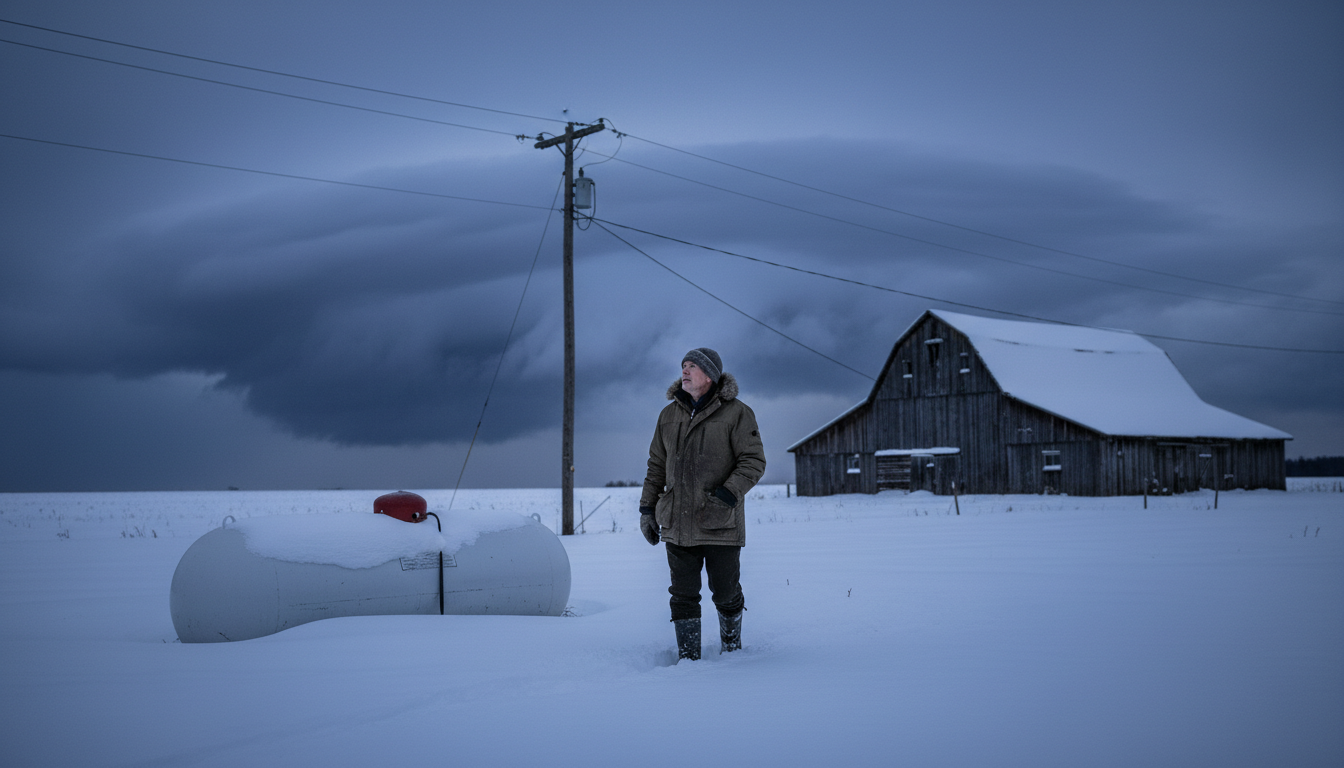
Wind can take down a branch. Lines can suffer damage too. Freezing rain creates a different problem. Ice forms on branches. Overhead equipment collects ice as well. The new weight is far from normal. A limb may hold through a windy day. Ice coating can make that limb fail.
That can leave more damage to sort out. It exceeds a brief interruption. Keep access to the panel clear. Make outdoor connections easy to find. Check the barn route. Check the well house route. Stored machinery must not block them. Snowbanks seem like small problems. Frozen gates seem small too. They matter if you need access after dark.
Ontario Grid Context
Your property plan does not need to solve Ontario’s electricity system. Supply in the province comes from more than one generation source. Turn to official records for how Ontario’s electricity supply is generated. This broad view skips how long a local outage lasts. It does not name any affected rural line.
Public arguments on cost and reliability sit inside energy planning. Include the ongoing debate over Ontario’s electricity reliability planning. Provincial talks do not replace a close look. Review your own well, barn, water system, and panel labels.
A rural property needs a local plan for local consequences. The house may stay warm enough for a while. A separate building has water equipment. You must not ignore that equipment. Begin with loads for water, animals, drainage, and stored food. After that work down the list.
Where to Start
Carry a notebook on your next property walk. Use one page for every building. Write each item there that needs electricity. Jot the spot of its breaker or disconnect. Record the outcome if that equipment stopped running during winter weather. Keep it practical for someone else in the household.
Complete the list before anything else. Circle every load that can’t stay unattended in an outage. Use those loads as the start of backup power. Put winter routines into the discussion. Add the equipment that belongs in your plan. Walk the property before the first lasting snow covers the details.