
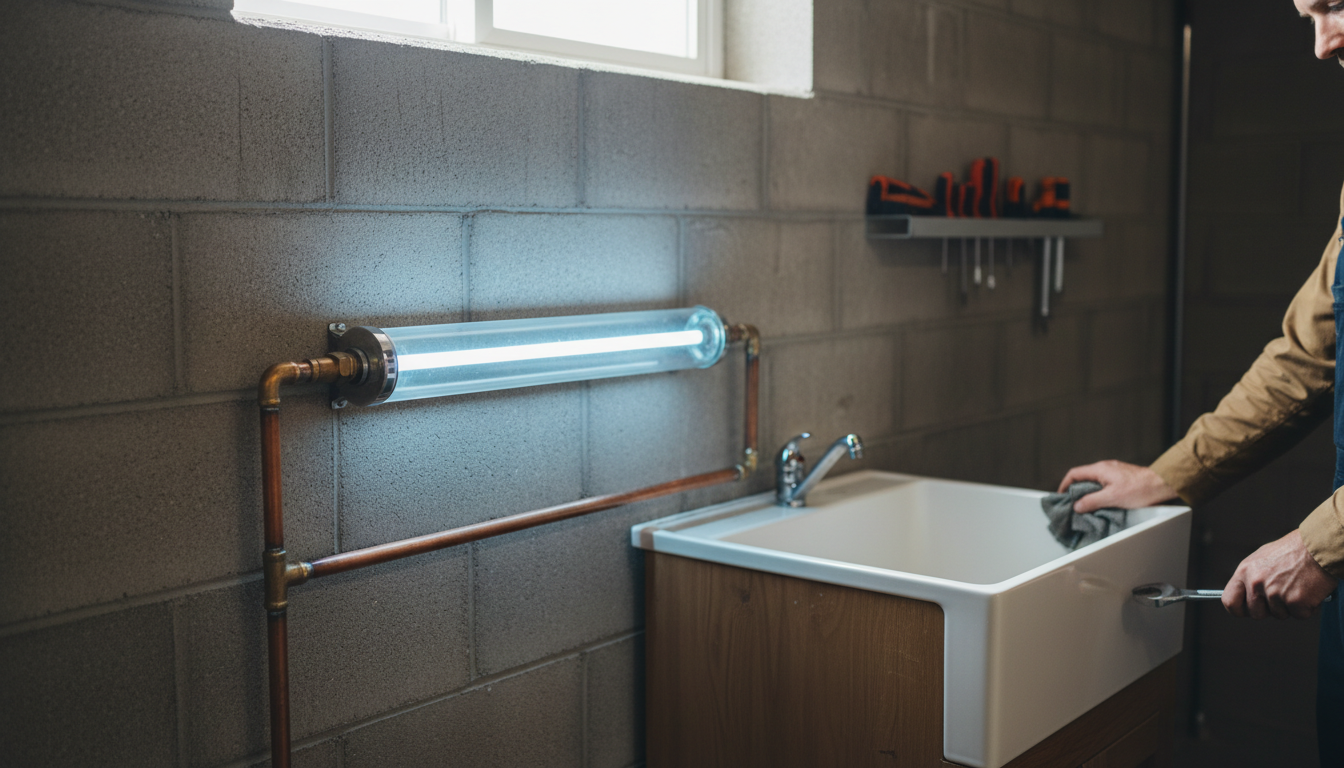

A test of well water can show bacteria. That result can make UV treatment sound like a simple answer. A treatment setup can sensibly include UV. Know the equipment role before you agree. UV is not a solution for every water problem. UV acts on microorganisms in the water. The treatment depends on reasonably clear water. Regular attention is required for the UV equipment.
What UV Disinfection Does
In UV disinfection, light treats the water instead of a chemical. Water moves through the treatment chamber. Microorganisms such as bacteria and viruses meet the light. Their normal function stops under that light. The method adds no chlorine taste or smell. Mineral content in the water does not change.
The lamp inside the chamber is a service part. It is not a permanent fixture. Replacement Wedeco UV lamps are made for compatible systems. The existing unit needs to be identified before a lamp is ordered. A lamp can still appear to be working. It can no longer be suitable for continued service.
UV has limits. It doesn’t remove sand, iron staining, hardness, or cloudy water. It won’t fix a contaminated well or damaged well cap. It won’t fix a drainage issue near the wellhead. It works as a treatment barrier for microorganisms entering the home’s plumbing. It is not a cure for the contamination source.
Where UV Fits
A residential UV unit commonly sits at the home well water entry point. The unit follows the pressure tank. Taps plus appliances receive water only after that unit. That spot treats the whole household supply. One drinking tap alone is not the limit. Testing must happen first. Those results must set the treatment plan.
Pre-filtration often pairs with a UV chamber. A sediment filter catches grit plus rust particles plus other visible matter. That matter can block the light’s path through the water. Clearer water improves the UV chamber’s chance. It can do its intended job.
Homeowners can miss a problem at this point. The UV unit may look like the main piece of equipment. The filter housing beside it receives less attention. The water may also have staining or odour or cloudiness. A technician may assess those conditions. Any UV placement recommendation in the final layout comes after that assessment.
See also: How to Choose Metal Stock for Equipment Parts
Lamps as Wear Items
UV lamp output declines over time. Treat scheduled replacement as routine upkeep. Lost output does not mean the chamber failed. The treatment choice was not wrong. One system part needs routine attention. It is much like a furnace filter.
Check more than the lamp alone. Many chambers place a protective sleeve around the lamp. Buildup on that sleeve can block the light. The blockage starts before light reaches the water. Service visits should cover sleeve inspection. A lamp swap is not the full job.
Skip any wait for a visible change at the tap. UV service needs may not appear in taste or colour or water pressure. That gap makes records useful. Store service notes with the system. The next homeowner, plumber, or technician can see what changed. Those notes also show when.
Technician Service Checks
A service visit should start with the water path. Do not start at the lamp box. Dirt on the pre-filter needs checking. Review filter housing maintenance. The technician checks for sediment reaching the UV chamber. That first look can show the cause. A replacement part alone may not solve the issue.
The chamber also needs close attention. A technician may inspect the lamp’s service history. Inspect sleeve clarity then indicator lights. Inspect alarms alongside the wiring. Check moisture around fittings. Those checks separate routine upkeep from installation issues. They also separate upkeep from the water entering it.
Seek a plain explanation of each component before work begins. Locate the part catching sediment. Locate the part providing UV treatment. Mark anything needing later attention. Request more detail if the explanation stays vague. Inquire about issues the system is designed to address. Inquire about issues the system cannot address.
Official Guidance Sources
Public health information should inform water testing and treatment decisions. Do not rely only on equipment labels. Canada’s open-data catalogue includes entries for Canadian drinking water quality guidelines. Those entries give an outside reference. Use that reference for a test result or a water-quality concern.
Federal catalogues also list federal water filtration reference material. It is for people learning the language of water treatment. Those resources do not assess your own well or plumbing or water sample. These resources can help you follow a technician conversation. Bring the actual test report instead of a description from memory.
What to Do Next
Bacteria were found in the well water test. Make the test result your starting point. Ask what may be entering the well. Sediment may need attention before a UV chamber is installed. Other water conditions may need attention too. One part of a sound response can be UV. Treat UV as an ongoing maintenance item. Do not treat it as an install-and-forget device.
Speak with a water treatment professional at the appointment. Ask where the unit would sit. Ask what protects it from sediment. Ask how the lamp and sleeve will be serviced. Keep your water test results and service records together. Bring both to the appointment.
