
Business information management involves collecting, organising, storing and maintaining digital records across different departments. Businesses use a secure data destruction service to dispose of sensitive information stored on hard drives, computers, laptops, servers and other digital storage devices. These services include data wiping, hard drive shredding, physical destruction of storage media and proper handling of electronic devices. Understanding these services helps businesses learn about different data disposal methods, storage device management and the processes involved in handling information at the end of its lifecycle.
Understanding Business Information Management
Business information management refers to the processes used to collect, organise, store, maintain and dispose of organisational information. It includes digital documents, customer records, employee information, financial files, operational reports and other business-related data.
An effective information management system considers the entire lifecycle of information, from its creation to its eventual disposal.
See also: How to Install and Maintain Marina Dock Lights for Long-Term Use
Different Types of Business Information
Organisations maintain various categories of information depending on their activities and operational requirements.
Common examples include:
- Customer information: Contact details, service records and transaction histories.
- Financial information: Accounting records, invoices, tax documents and payment information.
- Employee records: Employment documents, payroll information and administrative records.
- Operational information: Internal reports, project files and business procedures.
- Technical information: System configurations, software records and network documentation.
Each category may have different retention requirements and disposal considerations. Understanding these differences helps organisations establish appropriate information management procedures.
What Is a Secure Data Destruction Service?
A secure data destruction service involves specialised processes designed to make stored information inaccessible when digital storage devices are no longer needed.
Simply deleting files or formatting a storage device does not always remove the underlying information permanently. Depending on the storage technology and method used, data may remain recoverable.
Professional destruction methods are designed to address this concern by using appropriate techniques for different storage media.
Common Data Destruction Methods
The destruction method depends on the type of device, its condition and the required level of data sanitisation.
1. Physical Destruction
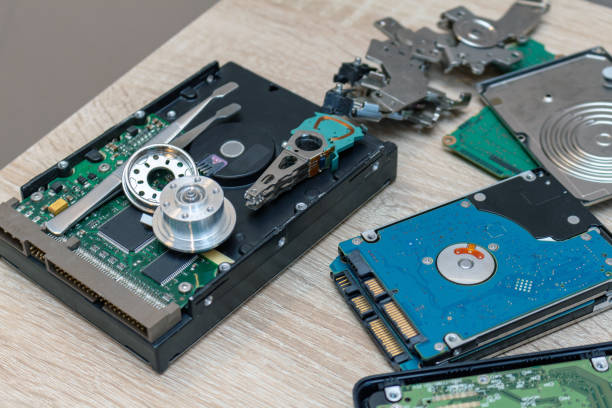
Physical destruction involves damaging storage media so that the original data cannot be retrieved through normal recovery methods. Techniques may include shredding, crushing and specialised mechanical destruction.
This approach is commonly considered for damaged, outdated or retired storage devices that are not intended for reuse.
2. Data Wiping
Data wiping uses specialised software to overwrite stored information according to an established sanitisation procedure. The objective is to remove existing information while potentially keeping the storage device suitable for another use.
This method is particularly relevant when organisations want to reuse or redistribute functional equipment.
3. Degaussing
Degaussing uses a strong magnetic field to disrupt magnetic data stored on compatible media. It is generally associated with magnetic storage technologies, such as certain hard disk drives and magnetic tapes.
It is not suitable for every storage technology, particularly solid-state drives.
How Data Destruction Supports Business Information Management
Data destruction is an important part of a structured information management programme. It connects information retention policies with technology asset management and operational procedures.
1. Supports Controlled Information Disposal
Businesses regularly generate information through everyday activities. Some records need to be retained for operational, legal or regulatory purposes, while others eventually reach the end of their required retention period.
A secure disposal process helps organisations distinguish between information that must remain available and information that is ready for destruction.
This creates a more organised approach to managing business records and storage resources.
2. Contributes to Data Protection Practices
Data protection involves managing information throughout its lifecycle, including the period when it is no longer actively used.
Old computers, external drives and storage devices may contain business information even after they have been removed from regular operations.
A secure data destruction service provides methods for handling these devices and reducing the possibility of information remaining accessible after disposal.
3. Supports IT Asset Management
IT asset management involves tracking and maintaining technology equipment throughout its useful life.
Businesses regularly replace computers, servers, laptops and other electronic equipment as operational requirements change.
Data destruction connects with this process by providing a defined procedure for handling information stored on retired devices.
It helps organisations establish clear responsibilities for equipment collection, data sanitisation, destruction and final asset disposal.
4. Helps Maintain Information Governance
Information governance establishes how business information is created, accessed, stored, retained and disposed of.
A documented destruction process supports these policies by defining who can authorise data disposal, which methods are appropriate and how completed activities are recorded.
These procedures help maintain consistency across departments and business locations.
The Role of Storage Devices in Data Destruction
Different storage technologies require different handling methods. Understanding their characteristics helps businesses select suitable destruction procedures.
Hard Disk Drives
Hard disk drives store information on magnetic platters. They are commonly found in desktop computers, laptops, servers and external storage systems.
Depending on the device’s condition and intended future use, organisations may select data wiping, degaussing or physical destruction.
Solid-State Drives
Solid-state drives use flash memory to store information. Their internal structure differs from traditional magnetic hard drives, which means conventional destruction methods may not be suitable.
Appropriate sanitisation techniques should account for flash memory architecture, including areas that standard overwriting methods may not fully address.
USB Drives and Memory Cards
USB drives and memory cards are portable storage devices used for transferring and maintaining digital files.
Although compact, they can contain business documents, presentations, customer records and other information. Their small size makes proper identification and handling important during the disposal process.
Servers and Data Storage Systems
Servers and network storage systems may contain large volumes of organisational information.
Before equipment is retired, businesses should identify the storage components, review relevant retention requirements and determine the appropriate sanitisation or destruction method.
Important Stages in a Secure Data Destruction Process
A structured destruction process generally includes several stages to maintain accountability and ensure that storage devices are handled appropriately.
Device Identification and Inventory
The first stage involves identifying the devices scheduled for data destruction. Information such as equipment type, serial number, storage capacity and physical condition may be recorded.
An inventory provides a reference for tracking devices throughout the process.
Data Retention Assessment
Before destroying information, organisations should review their retention policies and applicable requirements.
Certain business records may need to remain available for a defined period. Therefore, destruction should take place only after the relevant information has been approved for disposal.
Selection of Appropriate Methods
The destruction method should match the storage technology and the organisation’s requirements.
For example, magnetic storage devices and solid-state drives may require different sanitisation approaches. Selecting a compatible method helps ensure that the process is technically appropriate.
Destruction and Verification
Once the method has been selected, the approved procedure is carried out.
Verification helps establish whether the intended sanitisation or destruction outcome has been achieved. Depending on the method, this may involve checking process records, equipment outputs or other verification evidence.
Documentation and Reporting
Documentation provides a record of completed destruction activities.
A destruction report may include device identification details, destruction dates, methods used and relevant verification information.
These records help organisations maintain an organised information management history.
Choosing the Right Data Destruction Approach
Selecting a suitable destruction approach requires consideration of several business and technical factors.
Important considerations include:
- Storage technology: Identify whether information is stored on magnetic drives, solid-state devices or removable media.
- Data sensitivity: Consider the nature of the information and its protection requirements.
- Device condition: Determine whether the equipment is suitable for reuse or requires physical destruction.
- Retention requirements: Confirm that information is eligible for disposal.
- Verification procedures: Establish how the destruction outcome will be confirmed.
- Documentation: Maintain appropriate records of the completed process.
Considering these factors helps businesses develop consistent procedures for managing information at the end of its lifecycle.
Integrating Data Destruction Into Everyday Business Operations
Data destruction works most effectively when it forms part of regular business information management rather than being treated as an isolated activity.
Organisations can integrate it into equipment replacement schedules, employee offboarding procedures, technology upgrades and office relocation plans.
For example, when a business replaces its computer systems, the existing devices can be reviewed against an asset inventory. Relevant information can be assessed for retention, while approved devices can enter an established sanitisation or destruction process.
Regular reviews of internal procedures also help businesses keep their disposal practices aligned with changing technology and operational requirements.
Conclusion
A secure data destruction service plays an important role in business information management by providing structured methods for disposing of information stored on digital devices. From identifying storage media and selecting appropriate destruction techniques to verifying outcomes and maintaining documentation, each stage contributes to a well-organised information lifecycle.
By integrating data destruction into information governance, IT asset management and routine business operations, organisations can establish clearer procedures for handling information throughout its useful life and beyond.